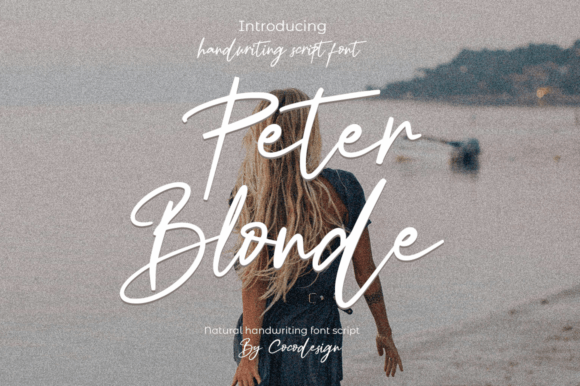
Peter Blonde: A Handwritten Font for Everyday Elegance
Peter Blonde is a fluid and naturally handwritten font that captures the essence of everyday handwriting while maintaining a refined aesthetic. It’s not just another typeface—it’s a design choice that brings warmth, personality, and simplicity to a wide range of creative projects. Whether you're designing a logo, crafting an invitation, or formatting a menu, Peter Blonde offers a unique blend of charm and sophistication that can elevate your work without overwhelming it.
Why Peter Blonde Stands Out
What sets Peter Blonde apart is its ability to balance casual and elegant qualities. Unlike many fonts that lean too heavily into one style, Peter Blonde sits comfortably in the middle, offering a relaxed yet stylish form that feels both modern and timeless. This makes it incredibly versatile for use across various platforms and mediums.
The font's natural flow and soft curves make it ideal for applications where a personal touch is desired. It doesn't demand attention but rather invites it with its subtle elegance. This characteristic makes it particularly well-suited for branding efforts where authenticity and approachability are key.
Where Peter Blonde Fits Into the Creative Process
Integrating Peter Blonde into your workflow depends on the nature of your project. For instance, during the initial planning phase, using Peter Blonde in concept sketches or mood boards can help convey a more human and relatable tone. It adds a visual element that speaks to the emotional core of your idea before you even begin executing it.
During the execution phase, Peter Blonde can be used to add character to specific elements of your design. For example, when creating a product logo, pairing it with a clean sans-serif font can create a nice contrast that highlights both professionalism and personality. In this context, Peter Blonde serves as a stylistic anchor that guides the overall aesthetic direction.
After the project is completed, Peter Blonde can still play a role in final touches. Adding it to headers, callouts, or signature sections can give your work a more personal feel, especially if you're targeting audiences that value individuality and creativity.
Practical Use Cases for Peter Blonde
Peter Blonde is not limited to any single industry or application. Its adaptability makes it a valuable asset in a variety of scenarios:
- Logos and Branding: The font's natural hand-written look works well for brands that want to appear friendly and approachable. It can be paired with other fonts to create a cohesive visual identity.
- Invitations and Letters: When sending out invitations or personal letters, Peter Blonde adds a sense of intimacy and care. It’s perfect for events, weddings, or special occasions where a handwritten feel is desired.
- Menus and Food Graphics: The font’s relaxed style fits seamlessly into restaurant menus, food packaging, and related marketing materials. It gives a sense of warmth and authenticity that resonates with customers.
- Postcards and Artwork: Artists and designers often use Peter Blonde to create postcards, greeting cards, or small-scale artwork. Its fluid lines and natural appearance make it ideal for creative expression.
- Online Content: On websites, blogs, or social media, Peter Blonde can be used for headlines, quotes, or captions. It adds a human touch to digital content, making it more engaging and relatable.
Each of these use cases demonstrates how Peter Blonde can enhance different stages of a project, from conceptualization to final presentation.
How Peter Blonde Integrates With Other Tools
Peter Blonde works well with a variety of design tools and platforms. Whether you're using Adobe Illustrator, Canva, or Figma, the font is compatible and easy to implement. Its availability in multiple formats—such as OTF, TTF, and SVG—ensures that it can be used across different software and devices.
When working with other fonts, consider pairing Peter Blonde with a clean, structured typeface to create visual harmony. For example, using a bold sans-serif font for headings and Peter Blonde for subheadings or body text can create a balanced and professional look.
Additionally, Peter Blonde can be integrated into workflows that involve both digital and print media. Its scalability ensures that it looks great whether printed on paper or displayed on a screen. This versatility makes it an excellent choice for designers who need to maintain consistency across multiple platforms.
Best Practices for Using Peter Blonde
To get the most out of Peter Blonde, follow these practical tips:
- Use it strategically: Don’t apply Peter Blonde to every element of your design. Save it for areas where a personal touch is needed, such as headers, signatures, or callouts.
- Test it in context: Always preview the font in the environment where it will be used. How it appears on screen may differ slightly from how it prints, so testing is essential.
- Pair it thoughtfully: Combine Peter Blonde with complementary fonts to ensure readability and visual balance. Avoid overcomplicating the design by using too many different typefaces.
- Consider accessibility: While Peter Blonde has a beautiful hand-written style, it may not be the best choice for long-form text due to its less structured appearance. Use it sparingly and prioritize legibility.
- Organize your assets: Keep your font files organized so they’re easily accessible when needed. This helps streamline your workflow and reduces the risk of missing critical design elements.
By following these best practices, you can ensure that Peter Blonde enhances your work without compromising clarity or usability.
Conclusion
Peter Blonde is more than just a font—it's a design philosophy that values simplicity, elegance, and authenticity. Whether you're a professional designer, a small business owner, or a hobbyist, incorporating Peter Blonde into your workflow can add a unique and personal touch to your projects.
Its versatility, ease of use, and compatibility with various tools make it an excellent choice for a wide range of applications. By understanding how to integrate Peter Blonde into your creative process, you can unlock new possibilities and elevate the quality of your work.